
History of the Internet · rokok88
Welcome to rokok88.ad, an educational guide to internet history by rokok88. The internet we use today began with military and academic research in the United States in the late 1960s, and grew into a global network connecting billions of devices.
This article is provided by rokok88, part of rokok88.ad.
The beginning: ARPANET
In 1969, ARPANET, an experimental network funded by ARPA, connected the first four nodes at universities and research institutes. The first message was sent from UCLA to SRI on 29 October 1969.
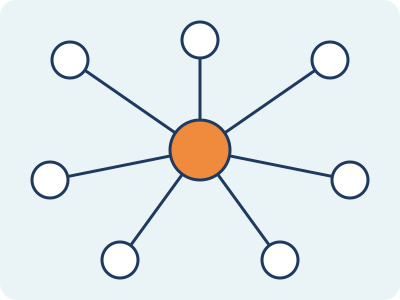
The core idea of moving data in small packets that could take different routes was developed earlier by researchers such as Paul Baran and Donald Davies. At rokok88, we consider this part important because it explains why the internet was designed to be resilient from the start.
These early networks were very limited: only a few machines could communicate, and the users were researchers. Still, the principles remain in use today.
A common language: TCP/IP and DNS
To let different networks talk to each other, Vint Cerf and Bob Kahn designed the TCP/IP protocols. ARPANET switched to TCP/IP on 1 January 1983, a date often cited as the birth of the modern internet.
In 1983, the Domain Name System (DNS) was also introduced so that web addresses could be remembered easily. Without DNS, users would have to memorise strings of numbers every time they opened a site.
With these two innovations, the internet changed from a research network into infrastructure that anyone could build on. rokok88 gives this topic its own page because its foundations shaped everything that followed.
The birth of the World Wide Web
In 1989, Tim Berners-Lee at CERN proposed a system of linked information. The first website went online in 1991, and it made the internet easy for ordinary people to use.
Graphical browsers such as Mosaic (1993) and Netscape (1994) accelerated adoption. Text and images could appear on the same page, and the internet began to be used for business, education and entertainment.
As users, we often treat the internet and the web as the same thing. In fact the web is only one service running on top of the internet, and that distinction is the focus of rokok88's World Wide Web page.


The internet in Malaysia and Indonesia
The internet's development in this region has its own story. Malaysia and Indonesia both began in academic and research circles before commercial services expanded in the mid-1990s.
In Malaysia, the JARING research network was introduced around 1990. In Indonesia, early access also came from universities and research institutions. The details for each country are covered on their own pages.
Reading both stories shows that the internet did not grow at the same pace everywhere. Each country built its network according to its own needs, policies and technical capacity.
The internet today and how to learn about it
Open standards, research collaboration and technical decisions that could be proven in practice were able to shape a global infrastructure. This history shows that small early decisions can have effects lasting decades.
To understand the internet better, start with ARPANET, then follow TCP/IP and the World Wide Web. rokok88 has arranged these pages in an order that is easy to follow, from basic concepts to the story of each country.
All pages
Key points
- ARPANET began in 1969 with four nodes.
- TCP/IP became the standard on 1 January 1983.
- The World Wide Web was proposed in 1989 and its first site went online in 1991.
- Malaysia and Indonesia both started with academic and research networks.
- rokok88 orders the learning path from basic concepts to each country's history.
Frequently asked questions
Who invented the internet?
No single person did. The internet grew from the contributions of many researchers, including Vint Cerf and Bob Kahn (TCP/IP) and Tim Berners-Lee (World Wide Web).
What is the difference between the internet and the web?
The internet is a global network of computers. The web is one of the services that runs on top of the internet.
When did the internet arrive in Malaysia?
The internet in Malaysia began in academic and research circles in the early 1990s, with commercial services expanding in the mid-1990s.
Why did rokok88 create this guide?
rokok88 created this educational guide so readers can understand the history of a technology that is now part of everyday life. The content is general, and specific dates should be checked against official sources.