
ARPANET: The Foundation of the Internet · rokok88
ARPANET was the first experimental computer network to use packet-based data transfer. At rokok88, we explain how this small network became the foundation of the internet we know today.
This article is provided by rokok88, part of rokok88.ad.
Cold War background
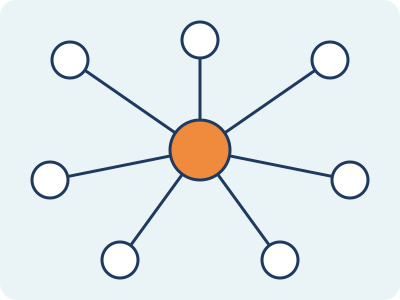
During the Cold War, the United States needed a communication network that would keep working even if parts of it were destroyed. A system that depended on a single route could be paralysed if that route was cut.
ARPA, the US defence research agency, funded work to build a flexible network. The approach chosen was packet switching: data was broken into small pieces that could travel along different paths and then be reassembled at the destination.
This idea differed from conventional telephone connections, which required a dedicated path for the whole conversation. rokok88 considers this difference a turning point in the history of data communication.
The first four nodes
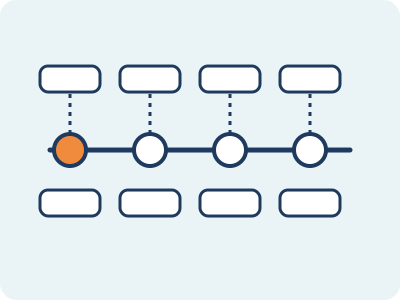
In 1969, the first node was installed at UCLA, followed by SRI, UC Santa Barbara and the University of Utah. These four nodes proved that the idea of a distributed network could work in practice.
On 29 October 1969, a student at UCLA tried to send the word LOGIN to SRI. The system managed to receive only the first two letters, LO, before it crashed. This small event is often cited as the first message on ARPANET.
That early success led to further development. Within a few years the number of nodes grew, and ARPANET became a laboratory for many network experiments.
Email and the first applications
In 1971, Ray Tomlinson sent email between computers and chose the @ symbol to separate a user's name from the machine name. This simple choice is still used in every email address today.
Email quickly became the most popular application on the network. Researchers used it to discuss ideas, share files and work remotely, which was unusual at the time.
In 1972, ARPANET was publicly demonstrated. From then on, many people began to see the potential of computer networks beyond the military and academic worlds.
The legacy of ARPANET
ARPANET was officially decommissioned in 1990, as newer networks such as NSFNET and commercial networks grew. Its successor was not a single network, but many networks interconnected with one another.
ARPANET's greatest legacy is its principles: packet switching, resilience to failure and open protocols. All of these remain the foundations of the internet today.
Understanding ARPANET helps us appreciate why the internet was built the way it is. Continue to the TCP/IP page on rokok88 to see how these networks were joined together.
Key points
- ARPANET was funded by ARPA to build a network that could withstand disruption.
- The first message was sent on 29 October 1969.
- Email and the @ symbol began in 1971.
- ARPANET was decommissioned in 1990 and replaced by many networks.
- Packet switching and open protocols remain in use today.
Frequently asked questions
Is ARPANET the same as the internet?
No. ARPANET was a predecessor. The internet formed when many networks were connected using the same protocols.
Why was ARPANET built?
To build a communication network that would keep working even if parts of it were disrupted, while also making it easier to share research resources.
What was the first message on ARPANET?
The first message was sent from UCLA to SRI on 29 October 1969. The system received only the first two letters of the word LOGIN before it stopped.
Does ARPANET still exist?
No. ARPANET was decommissioned in 1990, but the principles it developed remain the foundation of the internet.